HairMax LaserComb Research

 
  • HairMax success measured in number of people whose lives are enriched
  • Field experience with the HairMax supports clinical study that device is highly efficacious
  • Field research demonstrates 93% user satisfaction with the HairMax
  • 2010 – key HairMax clinical study demonstrated efficacy in females
  • 2010 – clinical studies demonstrated efficacy in males with 3 new models
  • 2005 Key clinical and scientific studies with the HairMax demonstrated efficacy in males
  • 2003 - first HairMax IRB study showed 84.2% success in hair growth and over 45% hair count increase
  • 2002 - HairMax independent study demonstrated 78.9% increase in tensile strength and 93.5% increase in hair counts.  


Lexington International, LLC is a leader in hair growth, hair care and hair science. Our primary objective is to help those suffering from androgenetic alopecia. Our goal is to provide an effective treatment that is affordable, easy to use and provides noticeable results without adverse side effects. Lexington bases its success on the number of people whose lives are enriched. We truly care about conducting our business ethically and appropriately. 


Female using HairMax LaserComb Lux9Our clinical Studies correlate directly with our field experience demonstrating that the HairMax LaserComb is a highly efficacious treatment for certain cases of androgenetic alopecia. The science behind Laser PhotoTherapy and PhotoBioStimulation is very practical. Usage of the HairMax LaserComb to date has been substantial. We have satisfied users in over 150 countries and have gained strong support from leading hair luminaries. Our extensive feedback overwhelmingly shows a positive user experience. Along with strong clinical data we believe that a key success criteria is user experiences - this is an area where we believe the HairMax LaserComb excels. Our field research demonstrates that 93% of HairMax users are satisfied with the results of their HairMax LaserComb.

 
Along with forging ahead with an active clinical agenda, we are committed to aiding clinical hair research and adding to scientific literature.
 
Below are descriptions of studies conducted by Lexington which have helped to further knowledge on the treatment of hair loss. These studies have helped to validate the efficacy of the HairMax LaserComb in hair growth and have made the device an important part of the overall treatment for hair loss.
 

2010 - Key Clinical Study in Support of 510(k) Submission to the FDA and Subsequent Clearance to Market in 2011


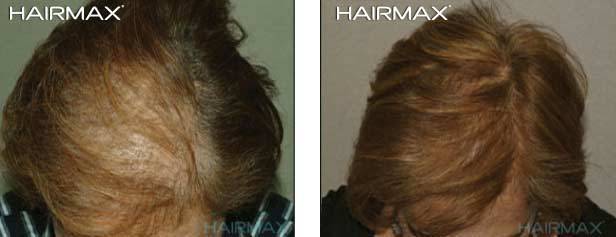
A double-blind, device controlled clinical study was performed at leading research centers to qualify and quantify the efficacies of the HairMax as a medical device for use in treating androgenetic alopecia (hair loss) in females. Patients, with ages ranging from 25 to 60, were included in a six month evaluation period.  Hair counts were measured at baseline, at 16 weeks and at the final visit at 26 weeks. Also, subjects in the HairMax group reported significantly greater increase in hair thickness and density.

At the end of the six-month period, 100% of the subjects in the study showed successful new hair growth with an average hair count increase for all patients of over 20%. These numbers medically and scientifically significant.


2009 - Evaluation of the Activity of Laser Doses on Ex-Vivo Hair Growth


The results of a study comparing the elongation of hair in a special medium from various laser wavelengths compared to those not exposed to laser energy was conducted.  The results after 10 days daily exposure to the various wave lengths showed that they all elongated hair vs. the control hairs that showed no elongation.


2005 - Key Clinical Study in Support of 510(k) Submission to the FDA and Subsequent Clearance to Market in 2007

 
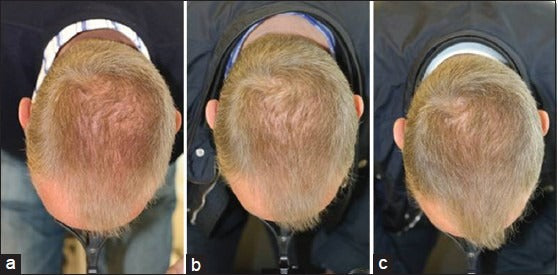
The results of the key clinical study performed with the HairMax LaserComb which led to FDA clearance to market was published in the May 2009 Issue of Clinical Drug Investigation. The article entitled, HairMax LaserComb Phototherapy Device in the Treatment of Male Androgenetic Alopecia, is indexed as Clin Drug Invest 2009: 29 (5): 283-292 in most of the biomedical databases such as MEDLINE, EMBASE/Excerpta Medica, etc.

Please click here to read about this study


2003 - First IRB Clinical Study 


Clinical studies were performed under an Independent Review Board protocol at a leading research center to qualify and quantify the efficacies of the HairMax as a medical device for use in treating androgenetic alopecia (hair loss). Patients, with ages ranging from 26 to 76, were included in a six month evaluation period. Study subjects were required to have thinning hair in the scalp area and have active hair loss at the time of entrance into the study. Analysis was conducted at two locations on the scalp, in the temporal and vertex areas.

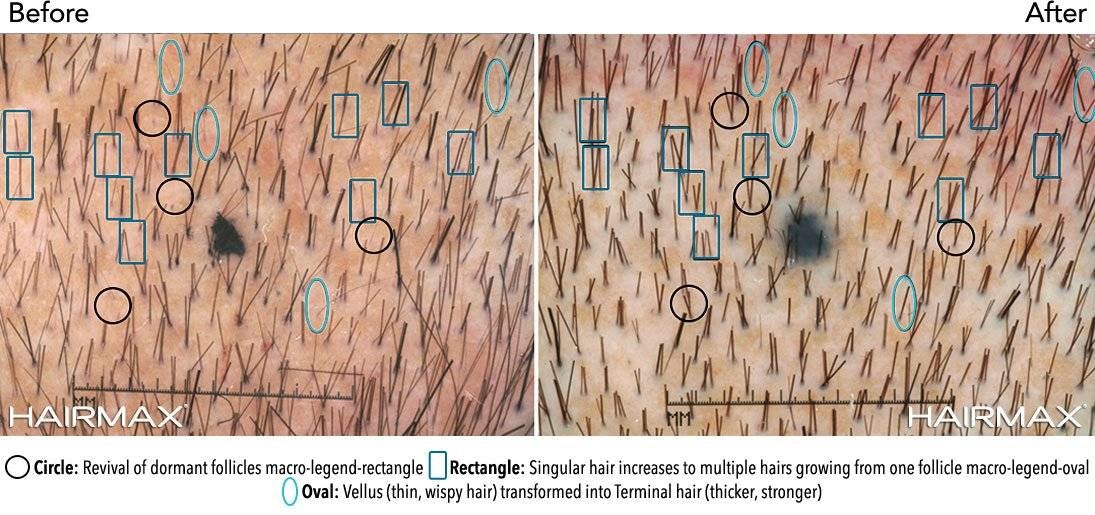
Before use of the LaserComb began, each area was clipped and a high-resolution photograph of the location was made. These photographs were loaded into an imaging system that identified each hair shaft. After magnification, a standard hair count was carried out and the number was recorded for comparison later in the study. Following the initial marking and hair count, each patient was provided with a HairMax LaserComb®. They were instructed to use it twice a week for the prescribed time of approximately 10 minutes, covering the entire scalp twice with each treatment. 

FDA Cleared Laser comb, Laser Hair Therapy, FDA Cleared for Promotion of Hair Growth, Hair Loss Treatment

Image from our 2003 Clinical Study showing the methodologies used


Each month, the patient would return to the clinic to have the study areas clipped, new photographs taken and new hair counts recorded.

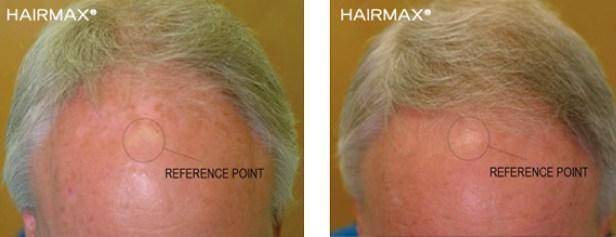
At the end of the six-month period, 97.4% of the patients in the study showed benefits from using the HairMax LaserComb®. Additionally, 84.2% of study participants showed successful new hair growth with an average hair count increase for all patients of over 45%. These numbers are significantly better than any other product tested to date for hair re-growth.


Response criteria

 
Benefit: Benefit to treatment was defined as lack of hair loss, or > 0% change from baseline in hair count.

Hair Growth: Success in hair growth was defined as an increase in hair count of > 11% from baseline.
 

Statistical Significance


All p-values for the study were statistically significant. The p-value (or the probability that a variate would assume a value greater than or equal to the observed value) for this study’s endpoint (<0.0001) indicates that the results of this study would have a very high probability of being valid across the general population. In other words, the general population of men and women suffering from hair loss would, in all probability, see the same hair count increases as seen by the patients in this study.


FDA Cleared Laser comb, Laser Hair Therapy, FDA Cleared for Promotion of Hair Growth, Hair Loss Treatment

Charts showing the increases in hair growth in the
frontal & vertex sites for Males


2002 - Study


The second clinical evaluation in 2002 was independently conducted, without any funding by Lexington, published by Dr. Michael Markou in the peer reviewed medical journal ‘International Journal of Cosmetic Surgery and Aesthetic Dermatology’. This evaluation on 35 individuals demonstrated an average of 78.9% increase in hair tensile strength and 93.5% increase in average hair counts.

Click here for the Study Report (PDF)


Initial Studies in Australia

 
Initial Research and development of the HairMax LaserComb® began in the 1980s in Sydney Australia where CEO Henry Pearl was a pioneer in the use of laser phototherapy in a clinical setting to activate hair growth. The results were dramatic with men experiencing substantial improvements in hair growth, regrowth and overall quality of hair.

The first clinical evaluation conducted in 1993 used a laser-based combination of laser irradiation, laser acupuncture and high frequency electrotherapy, with the proprietary name 'cell wave therapy'. The evaluation was performed over a 15-month period to ascertain its efficacy in delaying or reversing male androgenetic alopecia. The trial was divided into 3 phases, each of 5 months duration.

1st PHASE:  80% of the actively treated group showed a 27% mean increase in hair density at the end of the first phase…whilst the control group had a loss of 4.5%. This is a statistically significant trend to increase hair density, with a p value of 0.02.

2nd PHASE:  This increase in hair density was maintained by the actively treated group.

3rd PHASE:  After the actively treated group ceased therapy they had a significant loss of hair density with a p value of 0.001.
 
Satisfação do cliente é de primordial importância
      Clinicamente comprovada para promover o crescimento do cabelo *
      Superior a 90% relataram Satisfação do Usuário
      Patenteado e Fabricado nos EUA
      Qualidade Assegurada ISO
      Os membros orgulhosos da Better Business Bureau
 

* O avançado HairMax 7, Lux 9, eo Professional 12 modelos são indicados para tratar a alopecia androgenética, e promover o crescimento de cabelo emmachosque têm Classificações Norwood Hamilton de IIa a V e emfêmeasque Ludwig (Savin) I-4, II-1, II-2, ou padrões frontal da perda de cabelo e que ambos têm os tipos de pele Fitzpatrick I a IV.