Key Clinical Studies on the HairMax LaserComb®
Seven multi-centered, double- blinded, randomized control-device trials with 460 subjects were conducted with the HairMax LaserComb at top medical research centers such as the Cleveland Clinic, the University of Miami and University of Minnesota. The clinical studies included males and females between the ages of 25 and 60 years with a diagnosis of Androgenetic Alopecia who had been experiencing active hair loss within the last 12 months. Subjects were instructed to use the laser hair growth treatment device three times per week on non-consecutive days, 10-15 minutes per treatment for a total of 26 weeks. Hair density measurements were performed at baseline, at 16 and 26 weeks. Additional clinical visits were scheduled to monitor the laser hair loss treatment progress and overall hair growth. Clinical Study ResultsSubjects in the HairMax LaserComb® laser hair loss treatment group had:
Users of the HairMax LaserComb® laser hair growth treatment* received some or all of the following subjective benefits:
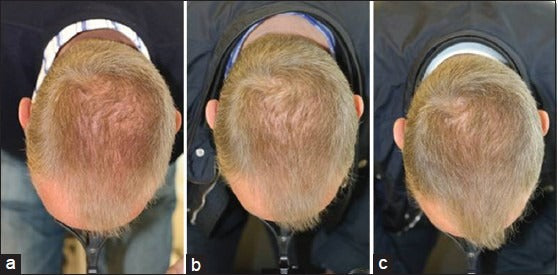
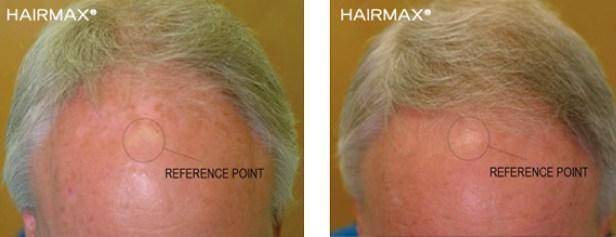
Qualified subjects had global images recorded at each visit using a stereotactic device.
Substantial increase in hair density. Overall improvement of hair quality
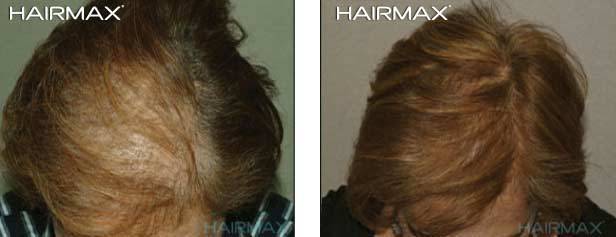
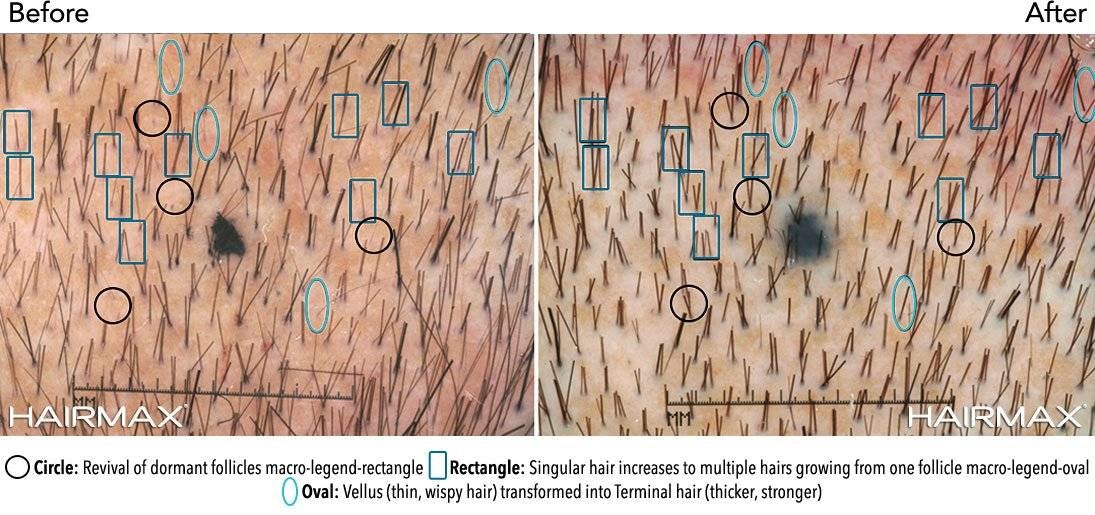
Filling in of hairline. Substantial increase in hair density. The photos shown above are of actual HairMax LaserComb users, but are not intended to represent results everyone who uses the device will necessarily experience. Qualified subjects had global images recorded at each visit using a stereotactic device. Non-Vellus Hair Density Macro ImagesAt baseline, a circle approximately 1 inch in diameter, positioned in the transition zone of the scalp, was identified as the site for hair clipping and tattooing. Within this site was the target area for the hair density evaluation during the laser hair growth treatment. Subjects were evaluated at baseline, week 8, week 16 and week 26. Digital images captured by FUJI S2 were taken of the target site within the clipped area following the site preparation. A 19 inch monitor was used for blinded evaluation. The image below corresponds with the un-retouched Macro images shown and demonstrate a 20% increase in hair growth density.
Actual clinical study photo above shows 29 hair/cm increase after 26 weeks of laser hair growth treatment. Study Objectives
Study Inclusion CriteriaThe clinical studies included males and females between the ages of 25 and 60 years with a diagnosis of Androgenetic Alopecia who had been experiencing active hair loss within the last 12 months. The inclusion criteria for males required a Norwood- Hamilton classification of IIa to V and Fitzpatrick skin types I to IV. The inclusion criteria for females required a Ludwig (Savin) classification of I-4, II-1, II-2, or frontal. All subjects were randomized for laser hair loss treatment analysis. A biostatistician calculated the study to be of a proper size to gauge statistically significant results of hair growth and hair density.
Lexington limited the skin types for the subjects in the studies to Fitzpatrick I to IV to facilitate the hair counting process. It is difficult to count dark hairs on dark skin and therefore the darker Fitzpatrick skin types (V and VI) were not included in the study. MethodsAfter diagnosing the scalp for Androgenetic Alopecia and exclusion of other dermatological conditions, subjects were randomized with either our active laser hair loss treatment device, or sham device. Subjects were then photographed for global evaluation and the target site of the scalp was identified and tattooed for baseline density. Subjects were then provided a device without usage instructions from the investigator per the protocol for OTC use. Subjects returned to the clinic at 8 and 16 weeks with a final visit at week 26 for clinical evaluation of hair counts and hair growth. The results of the key clinical study performed with the HairMax LaserComb which led to FDA clearance to market was published in the May 2009 Issue of Clinical Drug Investigation. The article entitled, HairMax LaserComb Phototherapy Device in the Treatment of Male Androgenetic Alopecia, is indexed as Clin Drug Invest 2009: 29 (5): 283-292 in most of the biomedical databases such as MEDLINE, EMBASE/Excerpta Medica, etc. Please click here to read an abstract of this study Prior StudiesPlease click here to read about our prior clinical studies with the HairMax LaserComb®.
|