Chiave Studi clinici sulla HairMax LaserComb
|
| |
 |
- Dal 2001, 7 studi clinici sono stati condotti con 460 soggetti
- Key clinical study on the HairMax published in peer review journal
- Results of study used to support HairMax LaserComb FDA 510(k) submission
- HairMax trattati perdita di capelli e la crescita dei capelli promosso nel 93% degli utenti
- No serious side effects ever reported from treatment with the HairMax
- Benefits of using the HairMax: decrease in hair fallout, increased speed of hair growth, more manageability of hair and overall better quality and condition of hair
|
|
| |
|
Dal 2001, ci sono stati 7 studi clinici condotti sul HairMax. Nel 2010, 2 di questi studi sono stati condotti su maschi e 2 sono stati condotti nelle femmine.
Clinical Results
Subjects in the HairMax LaserComb® laser hair treatment group had:
- Significantly greater increase in mean terminal hair count than subjects in the control group.
- Significantly better subjective assessments of thickness and fullness of hair than subjects in the control group.
- No subject experienced a serious adverse event from the laser hair loss treatment.
- Adverse event profiles were similar between the HairMax and control groups.
|
 |
 |
|
|
Users of the HairMax LaserComb® laser hair growth treatment* received some or all of the following subjective benefits:
- A substantial decrease in hair fallout.
- Some users experienced an initial increase in telogen fallout after starting treatment, but after this period, new anagen growth was observed.
- Increased speed of hair growth.
- More manageability of the hair.
- Overall better quality and condition of hair.
|
|

|
|

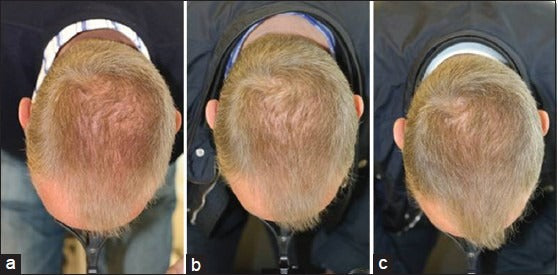
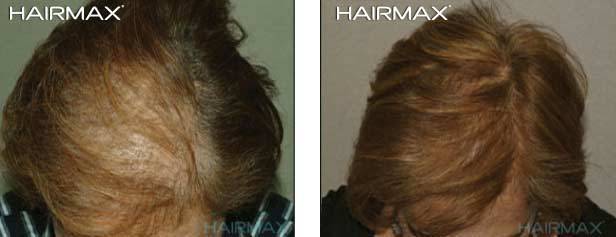
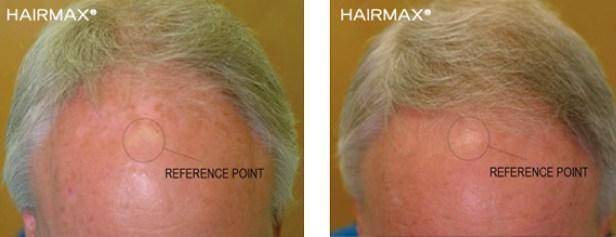
Le foto di cui sopra sono reali utenti HairMax LaserComb, ma non sono destinati a rappresentare tutti i risultati che utilizza il dispositivo sarà necessariamente esperienza. Soggetti qualificati aveva immagini globali registrate ad ogni visita utilizzando un dispositivo stereotassico.
|
Non-Vellus Hair Density Macro Images
At baseline, a circle approximately 1 inch in diameter, positioned in the transition zone of the scalp, was identified as the site for hair clipping and tattooing. Within this site was the target area for the hair density evaluation during the laser hair growth treatment. Subjects were evaluated at baseline, week 8, week 16 and week 26. Digital images captured by FUJI S2 were taken of the target site within the clipped area following the site preparation. A 19 inch monitor was used for blinded evaluation.
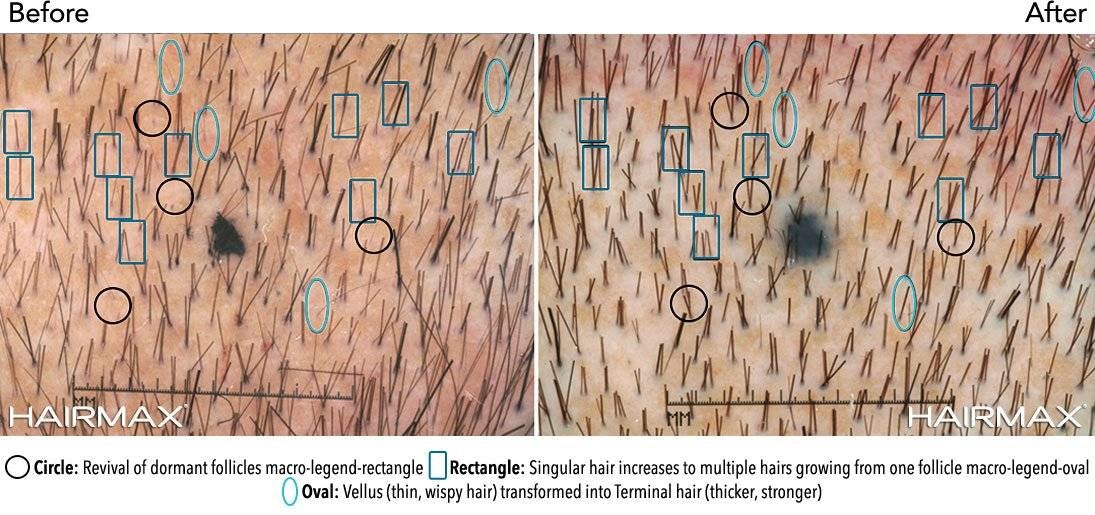
L'immagine sotto corrisponde con la non-ritoccate le immagini macro dimostrato e dimostrano un aumento del 20% della densità dei capelli crescita.
 Actual clinical study photo above shows 29 hair/cm increase after 26 weeks of laser hair growth treatment.
|
|
|
Study Objectives
|
| |
promozione della crescita dei capelli attraverso i cambiamenti nella conta dei capelli
cessation of hair loss
overall scalp health
safety |
| |
Study Design
All studies were designed as a multi-centered, double- blinded, randomized control-device trials conducted at eight sites in the United States. Subjects were instructed to use the laser hair growth treatment device three times per week on non-consecutive days, 10-15 minutes per treatment for a total of 26 weeks. Hair density measurements were performed at baseline immediately prior to randomization and again at 16 and 26 weeks. Additional clinical visits were scheduled to monitor the laser hair loss treatment progress and overall hair growth.
|
| |
Subject Population and Demographics
La popolazione dello studio comprendeva maschi e femmine di età compresa tra i 25 ei 60 anni con una diagnosi di alopecia androgenetica che avevano sperimentato la perdita dei capelli attivo negli ultimi 12 mesi. I criteri di inclusione per i maschi ha richiesto un Norwood-Hamilton classificazione delle IIa a V e tipi di pelle Fitzpatrick I-IV. I criteri di inclusione per le femmine richiesto un (Savin) la classificazione di Ludwig I-4, II-1, II-2, o frontali. Tutti i soggetti sono stati randomizzati per l'analisi di perdita dei capelli trattamento laser. Un biostatistico calcolato lo studio per essere di una dimensione adeguata per misurare i risultati statisticamente significativi di crescita dei capelli e la densità dei capelli.

Lexington limitato i tipi di pelle per i soggetti negli studi di Fitzpatrick da I a IV per facilitare il processo di conteggio dei capelli. E 'difficile contare i peli scuri su pelle scura e quindi il tipo di pelle più scura Fitzpatrick (V e VI) non sono stati inclusi nello studio.
Methods
Dopo la diagnosi del cuoio capelluto per alopecia androgenetica e l'esclusione di altre patologie dermatologiche, i soggetti sono stati randomizzati sia con attivo il nostro dispositivo di perdita dei capelli trattamento laser o un dispositivo farsa. I soggetti sono stati poi fotografati per la valutazione globale e il sito di destinazione del cuoio capelluto è stato identificato e tatuato per la densità basale. I soggetti sono stati quindi fornito un dispositivo senza le istruzioni d'uso dal ricercatore per il protocollo per l'uso OTC. Soggetti tornato in clinica a 8 e 16 settimane con una visita finale alla 26.a settimana per la valutazione clinica della conta dei capelli e la crescita dei capelli.
|
| |
|
The results of the key clinical study performed with the HairMax LaserComb which led to FDA clearance to market was published in the May 2009 Issue of Clinical Drug Investigation. The article entitled, HairMax LaserComb Phototherapy Device in the Treatment of Male Androgenetic Alopecia, is indexed as Clin Drug Invest 2009: 29 (5): 283-292 in most of the biomedical databases such as MEDLINE, EMBASE/Excerpta Medica, etc.
Please click here to read an abstract of this study
|
|
Prior Studies
Please click here to read about our prior clinical studies with the HairMax LaserComb®.
|
| |
| Customer Satisfaction is of Primary Importance |
Clinically Proven to Promote Hair Growth* |
Greater than 90% User Satisfaction Reported |
Patented and Manufactured in the USA |
ISO Quality Assured |
Proud Members of the Better Business Bureau |
|
|
| |
|
* Il HairMax Advanced 7, Lux 9, e la Professional 12 modelli sono indicati per il trattamento di alopecia androgenetica, e promuovere la crescita dei capelli inmaschi who have Norwood Hamilton Classifications of IIa to V and in femmineche hanno Ludwig (Savin), I-4, II-1, II-2, o modelli frontale di perdita di capelli e che hanno entrambi i tipi di pelle Fitzpatrick da I a IV.
|
| |
|